The Photograph Trap: When Capturing a Moment Replaces Seeing It
Travel photographs can preserve a few vivid details without taking over the day. Choose what to record, when to put the phone away, and how to look.
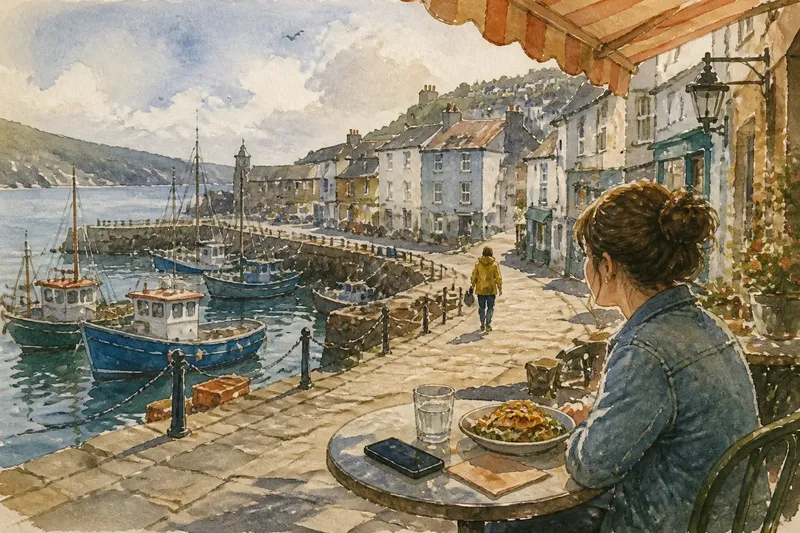
At a harbor, your phone is already open before you have noticed the boats, the wind, or the clatter of rigging. Travel photographs can help you remember a place, but collecting every view can crowd out the experience itself. The useful question is not how many pictures to take; it is what you want each one to help you recall.
Imagine Mara spending a free day in a fictional coastal town called Bellweather. She plans to walk through the old port, eat lunch, and take a bus to a hilltop overlook. She has saved a list of popular photo spots, but she wants to return with a clearer memory of the day, not just a full camera roll.
Notice when photographing narrows your attention
At the harbor, Mara sees blue boats and raises her phone. She shifts to avoid a passerby, changes the framing, takes several versions, and checks the screen after each one. The boats remain in view, but she is concentrating on what fits inside the frame.
A photograph can draw your eye to light, edges, and small details. It can also pull attention away from the sounds, weather, people using the space, and what happens just after the shutter closes. Repeatedly looking for a polished image can turn a walk into a series of small production tasks.
At lunch, Mara photographs her plate before tasting it. Then she notices the bright awning behind the food and considers another angle. The meal is warm, the café is noisy, and a server is carrying a tray through a tight aisle. She puts the phone down and takes in the room before picking up her fork.
Before you reach for your camera, ask what you would notice if you could not keep an image. It might be the breeze, a doorway’s shape, or the first taste of lunch. Give that detail your attention, even if you decide to photograph it afterward.
Choose a purpose for each travel photograph
Mara decides that her pictures can serve different purposes: one can locate her in town, another can preserve a detail, and a third can include her companion if they want to be in it. This is a plan for her invented day, not a rule that every traveler needs to follow.
At the harbor, she takes one wide photograph of the boats and the sloping street behind them. She looks around before and after taking it, then puts her phone away. Later, she photographs a worn brass bell above a shop door because its irregular ring caught her attention. At the overlook, she asks her companion about a portrait and respects their answer.
Each picture has a clear job. The wide view recalls the setting; the bell points to a detail; a portrait can preserve a shared moment when everyone agrees. Naming a purpose helps you distinguish a chosen image from an automatic one.
- Check the scene: If it would help you remember a setting, detail, or consenting companion, take a photograph; if not, continue looking without the camera.
- Check what is outside the frame: If the surroundings add useful context, include them; if they reveal someone’s private moment, change your angle or leave the camera down.
- Check the first image: If it is blurred, blocked, or misses a consenting person, adjust and retake it; if it records what matters, stop rather than polishing it further.
- Check your companion’s preference: If they agree to be photographed, choose a comfortable spot together; if they decline, take a view without them or put the phone away.
- Check local expectations: If close photography of people seems unwelcome, ask first or photograph the setting instead; if you cannot ask, avoid making them the subject.
- Check the camera roll later: If duplicates or accidental images add no useful memory, delete or sort them; if a picture brings back a clear moment, keep it.
A chosen photograph can mark part of a day without serving as proof that you were there.
Give unphotographed moments room
After leaving the harbor, Mara walks toward the bus stop without looking for another frame. She notices a shopkeeper sweeping grit from a threshold and watches the afternoon light shift as clouds pass. Neither detail needs to become an image.
At the hilltop, she takes her planned wide view, then sits on a low wall with her phone in her bag. She watches bus lights appear on the road below. The moment is not better because it is unrecorded; she simply prefers to experience it without another task.
Photography is not shallow, and putting a phone away does not make a traveler more attentive by itself. The practical test is whether your chosen way of recording helps you notice the place or interrupts each encounter. Some people remember through images; others add notes, sketches, or a conversation.
If a photograph leaves out useful context, add a brief note or voice memo. Mara might record the bell’s uneven ring, the sharp wind at the overlook, and the café’s clattering plates. Those details give her more to recall than another similar view.
What should you do when you want another shot?
Should I set a limit on travel photographs?
A fixed limit may suit you if counting helps you make deliberate choices, but it can turn a relaxed walk into a tally. Try choosing what you want the pictures to remember, then check whether you are still enjoying the scene between shots.
What if I am afraid I will forget the place?
Keep images that recall the setting or a detail, and add a short note about a sound, taste, or encounter. You do not need to photograph every view to make the day memorable.
Is it rude to photograph people while traveling?
Consider the person, the situation, and local expectations. Ask before making someone the subject, respect a refusal, and avoid treating public activity as permission to photograph people closely.
Should I delete travel photos that I never look at?
Keep, sort, or delete images according to what feels useful to you. If a camera roll feels burdensome, remove obvious duplicates and save pictures that bring back clear memories.
Decide whether a retake solves a real problem
Later, Mara sees a narrow lane with laundry overhead. She takes one picture, then notices it does not match the feeling of standing beneath the cloth. Instead of shifting repeatedly for a more impressive image, she lowers the phone and stays in the lane for a moment.
A second shot makes sense if the first is blurred, blocked, or misses someone who agreed to be included. Before retaking, name what you want to preserve. If you can identify a real problem, adjust and try again; if you cannot, look at the scene without the screen and decide whether another picture still matters.
For a fully worked plan, imagine Mara starts the day with a saved list of photo spots, a charged phone, and a free afternoon. She wants to remember the town’s layout, one detail, and a shared moment. First, at the harbor, she looks around and takes one wide view that includes the boats and sloping street. Next, she photographs the bell after listening to it. Then she asks her companion about a portrait; when they agree, they choose a quiet spot away from the path. At the overlook, she takes the planned view and puts the phone away. The result is a small set of pictures tied to specific memories, while the walk, meal, and view remain more than camera stops.
Travel photographs are most useful when they support your memory rather than inventory every attractive thing. Use the phrase travel photographs as a prompt to decide what you want to keep: a place, a detail, or a moment with someone who agrees. Then put the phone away long enough to notice what the frame cannot hold.