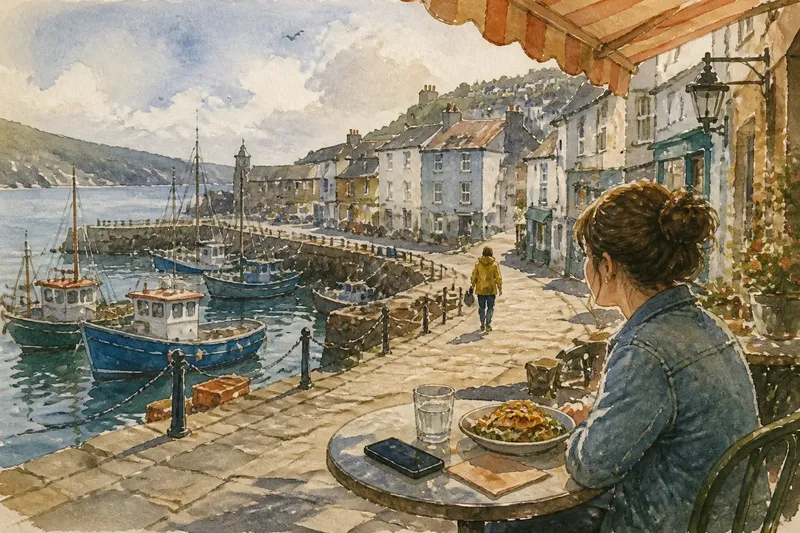
The Guest Book Before the Souvenir Shop
Travel writing preserves more than a route: learn how to record practical details and personal impressions so a place stays vivid after the trip.
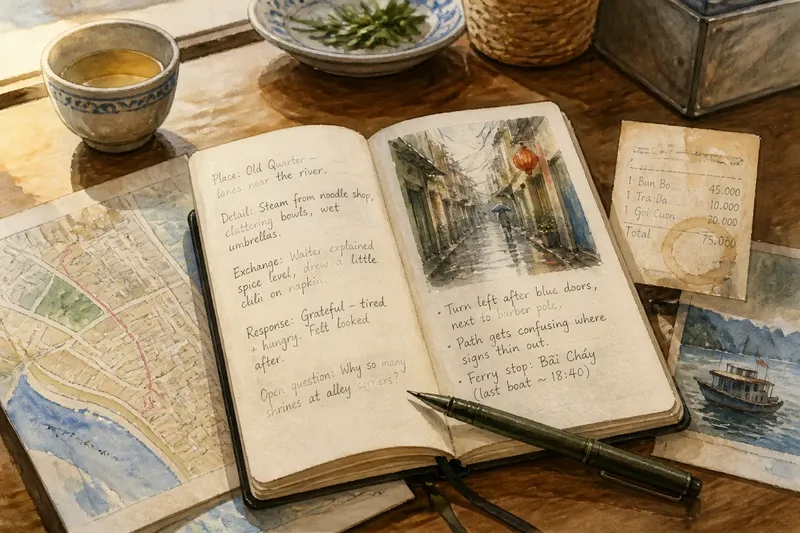
You have a paper map folded beside your café receipt, and a notebook open to a page of hurried street names. Later, the names may help you retrace the route; the note about a waiter patiently explaining the menu may bring the evening back. Travel writing can keep both kinds of memory. The useful question is what each habit preserves.
1. A route record keeps the journey retraceable
Early travel accounts often had practical work to do. A traveler might note roads, crossings, lodging, weather, food, and the time a journey seemed to take. Even an informal diary could become a record that helped someone else picture the way through an unfamiliar place.
Route notes still earn their space. Write down the name of a ferry stop, the turn after a distinctive building, or the fact that a path becomes confusing where the signs thin out. Such details are less romantic than a sweeping description, but they can answer a question months later: How did I get there?
Keep those notes compact. A pocket notebook, the notes app on your phone, or marks on a printed map can all work. Record what you may need to identify again, not every street you pass.
2. An observation records what was there
A travel account can also preserve details that a route cannot: the clatter of dishes in a lunchroom, a row of wet umbrellas by a doorway, or the way neighbors use a square at dusk. These observations make a place more than a sequence of directions.
Specific nouns help. “A busy market” could describe almost anywhere; “a vendor stacking green plums beside a chipped blue scale” gives the memory a particular surface. You do not need to write beautifully in the moment. A sharp detail is often enough to open the scene later.
Notice ordinary routines, not just sights designed for visitors. The queue at a bakery, a bus driver waiting for a late passenger, or a shopkeeper sweeping the threshold may show how a neighborhood moves through its day. Observe without turning people into scenery, and leave out private details you have no reason to preserve.
3. An impression records your part in the scene
Modern personal travel writing often makes room for the traveler’s response alongside the place itself. That shift does not make routes or observations obsolete. It adds a different record: what you expected, what unsettled you, what felt familiar, and what you could not understand yet.
Personal impressions become more useful when they include their cause. Instead of writing only “I felt welcome,” note the small exchange that shaped that feeling. Instead of declaring that a city was overwhelming, describe the crowded tram, your tiredness, and the difficulty of finding the stop. The reader—and your future self—can then see how the feeling arose.
Say you spend an afternoon in a coastal town and feel impatient with its slow service. In your notebook, you might record that you had skipped lunch, that the café was full, and that a server paused to help an older customer. Later, those details could make the impatience legible without turning it into a verdict on the town.
4. A small exchange can outlast a landmark
A landmark is easy to name and easy to forget. A brief conversation may stay vivid because it changed what you noticed afterward. Write down the exchange in your own words, and distinguish your recollection from an exact quotation if you are not sure of the wording.
Context matters. Note where the conversation happened, what prompted it, and what you understood at the time. If language, fatigue, or a noisy room made the meaning uncertain, say so. That uncertainty belongs to the memory too.
A courteous note is not a license to publish someone else’s private story. For personal writing, keep identifying details out when they do not serve the scene. For publication, consider consent and the likely effect on the person described.
5. A mixed page preserves more than one truth
The most useful travel record often puts facts and feeling beside each other. A place name can anchor a scene; a sensory detail can make it specific; a personal response can show why it mattered to you. None has to carry the whole account alone.
Try a simple page structure when you stop for the day:
- Place: Write the neighborhood, venue, or route segment as you understand its name.
- Detail: Record one sound, texture, smell, or repeated action you noticed.
- Exchange: Note a conversation or gesture, marking paraphrase where needed.
- Response: Say what you felt and what may have influenced that feeling.
- Open question: Write down something you still do not know, rather than guessing.
Imagine you have a train ticket, a receipt from a noodle shop, and ten minutes before departure. You jot the station name, the steam clouding the shop window, and your surprise that a stranger pointed out the right platform. The expected result is a page that can help you locate the day later while leaving room for what the moment meant to you.
6. The page should match the memory you want to keep
Not every stop needs a full entry. On a day when logistics matter, make a clear route note. When a scene catches your attention, linger over the observation. If your response feels strong, record the circumstances around it before the feeling hardens into a broad judgment.
Carry a method that suits your habits. A small notebook encourages brief, tactile notes; a phone is quick for names and reminders; a postcard or ticket can help you recall where a memory began. If you use voice notes, capture a few concrete details rather than a long, unedited account.
For travel writing, the shift from route records to personal impressions is not a choice between fact and feeling. A route tells you where the day went. Observation shows what occupied it. Reflection records how you met it. Keep the kind of note you are most likely to need, and add one detail that makes the place unmistakably itself.
What should travel writing preserve?
Should I write notes during the day or at night?
Jot names and fleeting details when they appear, then add context during a quiet pause. A short note made promptly can prevent a street name or exchange from blurring together with another one.
What belongs in a travel notebook besides impressions?
Include useful place names, route cues, sensory details, and questions you could not answer. Keeping these close lets a future reader separate what you observed from what you inferred.
How can I describe a place without making it sound like a review?
Describe a specific scene before judging it. Include your circumstances, such as tiredness or unfamiliarity, so a personal reaction does not stand in for a claim about everyone’s experience.
Is a phone note as useful as a paper journal?
Either can preserve a memory if you can find and understand the note later. Choose the format you will actually use, and add enough context that a place name or fragment makes sense after the trip.