Museum, Market or Neighborhood Walk: Choose by the Day You Want
Choose a museum, market, or neighborhood walk by your energy, curiosity, and appetite for conversation, then spend the outing noticing what suits you.
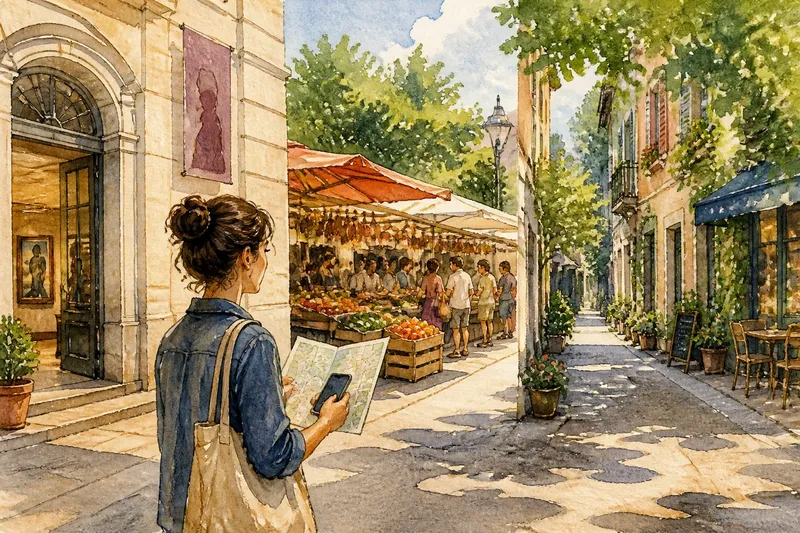
You have a free afternoon, a map open on your phone, and no strong urge to commit to a full-day plan. Choosing between a museum, a market, and a neighborhood walk is easier when you start with the kind of attention you can offer today. Each outing has a different pace and social feel, even in the same city.
Choose a museum when you want a focus to follow
A museum gives an afternoon a clear center. Its rooms, labels, and objects offer a sequence of subjects to respond to, so you do not have to invent a route or keep deciding what to look at next. This suits a day when your energy is steady but you would rather direct it toward one collection than toward navigating streets.
Museums also let you choose your own level of engagement. You can read labels closely, pick a single gallery, or move through the building without trying to see everything. If crowded rooms or dense displays wear you down, look for a smaller collection, a house museum, or a museum with outdoor space. Check the visitor information for timed entry, gallery closures, and rules about bags or photography before setting out.
The social feel is usually quiet and self-contained. You can go alone without needing to make conversation, or share reactions with a companion between rooms. A museum is a good fit when you want ideas and visual detail more than spontaneous interaction.
Pick one gallery or subject before you arrive; let the rest remain optional.
Choose a market when you want movement and contact
A market suits a day when you have some energy to spare and enjoy taking in several things at once: voices, food, colors, and the small exchanges between sellers and customers. Unlike a museum, it rarely offers a single route or a quiet pace. You can browse, stop for a snack, and leave when the noise or crowd becomes tiring.
Markets vary. A neighborhood produce market may feel practical and local, while a covered food hall can be busy and designed for visitors. Look at what is sold and when vendors are open, then decide whether you want to shop, eat, or simply observe. If you are not buying, keep walkways clear and avoid handling goods without an invitation. Ask before photographing a vendor or customer; a lively public setting does not mean every person wants to be in your pictures.
The social feel is more outward-facing than in a gallery. A brief question about an ingredient or a dish can lead to a useful exchange, but you do not need to turn browsing into a conversation. Carry a small amount of local cash if that is commonly useful there, and keep your belongings close in a crowd.
Choose a market when sensory variety sounds appealing, not when you need a quiet reset.
Choose a neighborhood walk when you want the city between landmarks
A neighborhood walk fits a day when you are curious about ordinary street life and comfortable making small route decisions as you go. Instead of moving through a curated collection or a concentrated trading space, you notice how the area changes from one block to the next: a bakery opening its shutters, a courtyard behind a gate, or a row of shops serving residents.
This outing asks for more attention to direction and surroundings. Pick an area that interests you, use a paper map or a saved map on your phone, and leave room to turn down a side street. Stay on public paths, respect signs and private entrances, and avoid treating homes or residents as scenery. A walk can be solitary, but it also makes an easy shared activity if companions like to stop and point things out.
Say you have slept poorly but still want to be outside. Choose a short route through a compact area with a café or transit stop as an easy endpoint. You can pause when you need to and still notice storefronts and street details; a crowded market or a large museum might demand more sustained attention that day.
For a walk, choose a place that interests you more than a distance to cover.
How do you choose for today?
Which outing works when you feel tired?
Choose a small museum if you want a sheltered, low-conversation visit with a clear focus. Choose a short neighborhood walk if fresh air sounds restorative and you can keep the route simple.
Which outing suits a strong interest in food?
A market is the direct choice if you want to see ingredients, prepared dishes, or everyday shopping. A museum may suit better if your interest is culinary history or objects, while a walk can reveal where locals eat and shop.
What if you want to meet people?
A market offers natural openings for brief, practical exchanges, especially when you ask a polite question or make a purchase. A guided neighborhood walk can offer more conversation; a self-guided walk usually leaves interaction to chance.
Can you combine two outings?
Yes, if the second outing is nearby and you are content to keep each one short. Pair a museum visit with a walk through the surrounding streets, for example, rather than trying to add a busy market across town.
Let the setting shape the outing
Before choosing, ask yourself three things: Do I want one subject or many impressions? Do I feel like talking to anyone? Would I rather follow a route or make choices as I go? Your answers point toward a museum, market, or neighborhood walk without turning the decision into a test of what counts as worthwhile travel.
Also consider the conditions around the experience. Rain can make a covered market or museum more comfortable; strong heat can make a shaded walk preferable to a crowded indoor space. Local opening times and access rules matter, so check the venue or market’s own information when your plan depends on them.
Say you arrive in a neighborhood with a local history museum, a produce market, and a compact lane of shops. You want to sketch storefronts, avoid loud crowds, and keep the afternoon flexible. You choose the walk, save the museum as a rainy-day option, and note the market’s opening information for another visit. The result is a route suited to your interest, with two clear alternatives if conditions change.
For a museum, market, or neighborhood walk, make the decision concrete with this quick check:
- Check the museum’s visitor page for entry rules; if timed entry fits your afternoon, plan around it, otherwise choose a walk or market that needs no booking.
- Check whether the galleries you care about are open; if they are, pick one as your focus, otherwise choose another collection or outing.
- Check the market’s vendor hours and offerings; if the stalls match what you want to see or eat, go browse, otherwise choose a museum or neighborhood route.
- Check whether you want conversation or quiet; if brief exchanges sound welcome, try the market, otherwise choose a museum or solitary walk.
- Check the forecast and available shade or cover; if rain favors indoor shelter, choose a museum or covered market, otherwise consider a shaded street route.
- Check the map for public paths and an easy endpoint; if the walk has a clear route and café or transit stop, take it, otherwise choose a more straightforward venue.
There is no need to turn an afternoon into a test of endurance. The useful choice is the one that gives your attention somewhere worthwhile to land. Museum, market, or neighborhood walk: a small, specific interest is often enough to decide.